






.png?locale=en)





Alsharq Tribune- Al Otaify
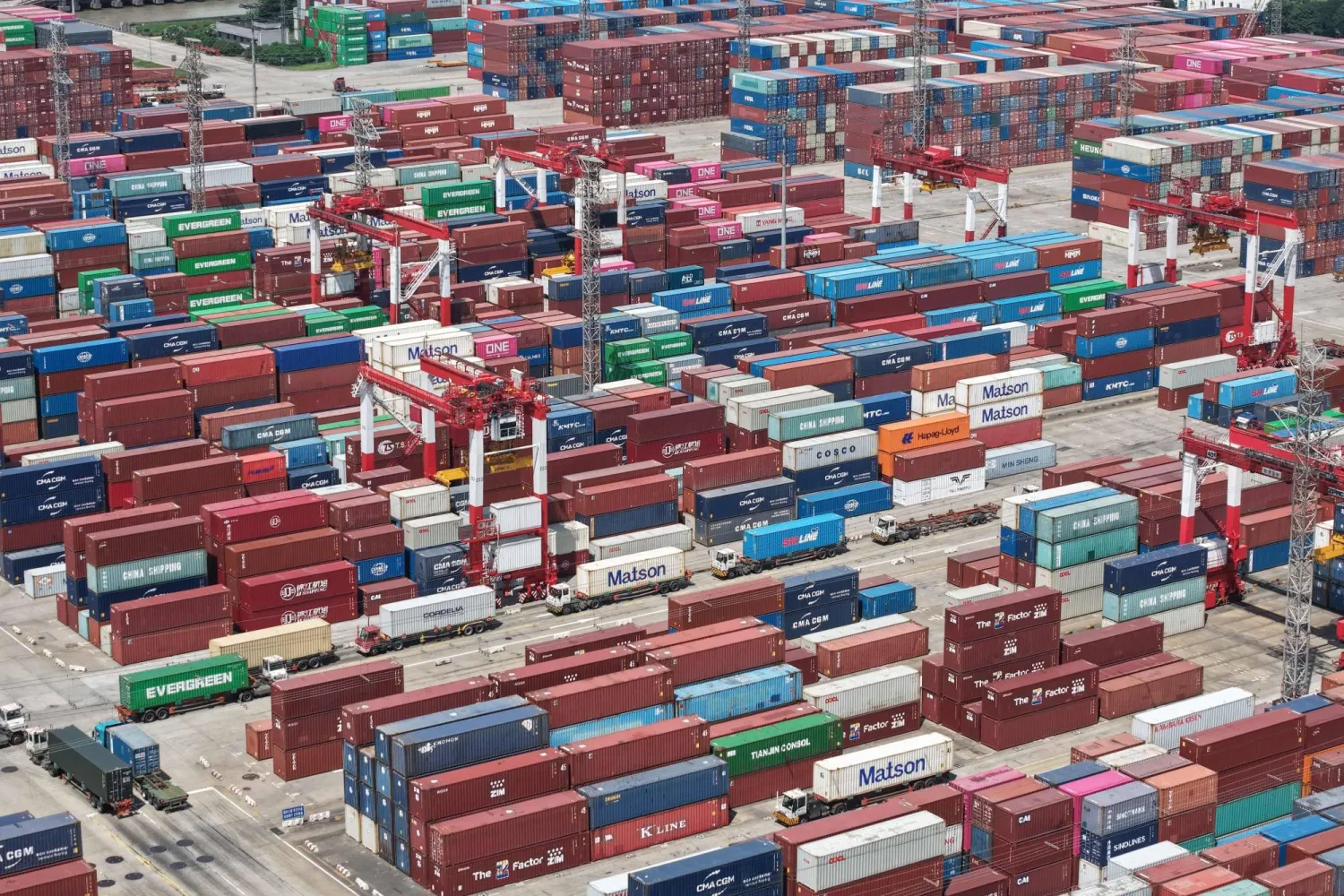
China's exports beat expectations in July, remaining a key driver of economic growth as the global AI infrastructure boom fueled demand for high-tech goods and exporters rushed shipments ahead of higher US tariffs.
The manufacturing powerhouse has been relying on external demand to sustain growth amid tepid domestic consumption and an investment downturn, but that reliance also exposes risks, as trading partners may step up protectionism in an uncertain global environment due to the Iran war.
China's exports expanded 23.9% year-on-year in US dollar value terms in July, customs data showed on Friday, slowing from a 27% surge the previous month and compared with a 22.2% rise forecast in a Reuters poll.
"External demand has become increasingly important this year for the growth outlook as China's K-shaped divergence widens," said Lynn Song, chief Greater China economist at ING. Imports were up 27.5% from July last year, slowing from the 36% jump in June and were in line with an expected 27.9% gain.
Analysts expect AI demand, which drove up the prices of related goods, to underpin strong export growth in the third quarter or even the entire second half, while some cautioned that China's tensions with trading partners might be heating up.
Exports of semiconductors in the first seven months almost doubled in value terms from last year, and overall high-tech products exports expanded 40.7%, customs data showed.
Ceramic shipments slumped 28.3% and the exports of toys fell 9.7%, in a further sign of the economy's uneven development where advanced manufacturers ride the AI boom but more traditional industries struggle due to subdued demand.
The Chinese yuan rose against the US dollar on Friday, hovering near a 3-1/2-year high. In a meeting late last month, China's top decision-makers called for a faster transition from old growth drivers to new ones, signaling priority on high-tech sectors.
China's economy grew 4.7% in the first half of 2026, keeping it broadly on track to meet Beijing's official full-year growth target of 4.5 to 5%, but growth slowed to 4.3% in the second quarter as weak consumption and investment clouded strong manufacturing and exports.
Exports of cars rose more than 50% in both value terms and quantity, driven by Chinese automakers' aggressive expansion abroad as domestic demand remained subdued. China's imports of natural gas dipped 0.9% from a year earlier in July, while crude oil dropped 24.3% on high prices and supply constraints.
China's trade surplus narrowed to $112.5 billion from $125.62 billion in June. Its trade surplus with the United States narrowed slightly to $28 billion in July from $28.86 billion the previous month. Exports to the US rose 17% from the same month last year.
Outbound shipments to the European Union rose 16%, while imports from the bloc dropped 1.4%. Trade with South Korea maintained robust growth in July, with exports up 46.6% and imports up 97.8%, on high-tech demand.
Chinese exporters and US importers continued to front-load shipments in July as they expected Washington's tariffs on Chinese goods to go up after the expiry of a 10% temporary global levy in late July, said Xu Tianchen, a senior economist at the Economist Intelligence Unit.
In July, the US imposed a new 12.5% tariff on Chinese imports after the 10% levy expired, part of a broader tariff campaign targeting trading partners Washington says have failed to curb forced labor.
A separate US investigation into trading partners' excess capacity will likely raise tariffs further. Chinese officials have repeatedly pledged to expand imports and promote balanced trade, yet the country's trade surplus, on track to top $1 trillion for a second year, continued to unnerve trading partners concerned about disruptions to their own domestic industries.
The European Union has been weighing tougher measures to curb its trade deficit with China, while Beijing's ties with Washington have shown signs of strain as they hit each other with trade restrictions and other measures ahead of an expected leaders' summit in September.
With exports booming and factories humming, policymakers may feel more comfortable delaying policies to boost household income and strengthen social security systems to address entrenched weakness in domestic demand.
Macquarie analysts said Beijing's policy support for domestic consumption and the property market would remain restrained as long as exports and manufacturing could help the economy achieve policymakers' annual growth target.