







.png?locale=en)






Alsharq Tribune-Otaify
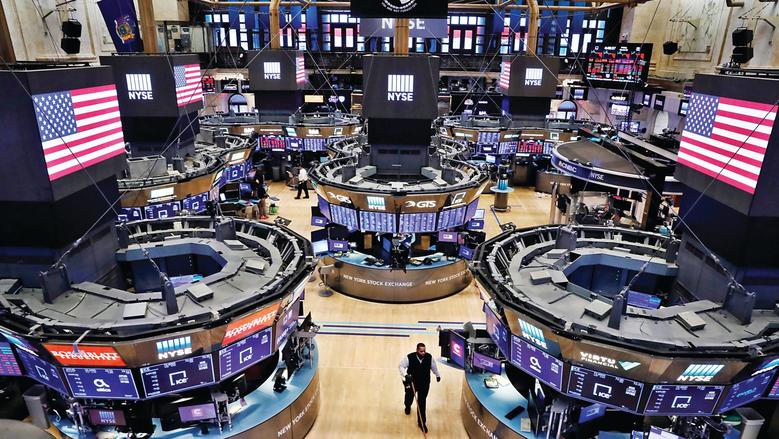
U.S. stocks ended sharply lower on Friday, as a stronger-than-expected May jobs report heightened bets on a potential Federal Reserve rate hike later this year.
The Dow Jones Industrial Average fell 695.15 points, or 1.35 percent, to 50,866.78. The S&P 500 sank 200.57 points, or 2.64 percent, to 7,383.74. The Nasdaq Composite Index shed 1,121.53 points, or 4.18 percent, to 25,709.43.
Six of the 11 primary S&P 500 sectors closed in negative territory, with technology and consumer discretionary leading the declines at 5.78 percent and 2.43 percent, respectively. Consumer staples and utilities were the top performers, rising 1.64 percent and 0.8 percent, respectively.
The U.S. Bureau of Labor Statistics reported that employers added 172,000 jobs in May, exceeding economists' expectations of around 88,000. The unemployment rate held steady at 4.3 percent.
While the strong labor market data underscored economic resilience, it also raised concerns about persistent inflation and reduced the likelihood of near-term monetary easing.
"Yet another stronger-than-expected U.S. jobs number in an environment of rising inflation is fuelling expectations of a Fed rate hike before the end of the year. Nonetheless, there is a lack of breadth in job creation and wage growth is slowing, meaning household finances are coming under increasing pressure," said James Knightley, chief international economist at ING.
Traders now price in a Federal Reserve rate hike by the end of this year. According to the CME FedWatch Tool, the probability of interest rates rising by year-end jumped to 72.7 percent on Friday, up from 50.5 percent the previous day. This shift came even as U.S. President Donald Trump continued to press for interest rate cuts while his nominee, Kevin Warsh, assumed leadership of the Federal Reserve.
Market volatility intensified this week as investors took profits after recent rallies and adjusted expectations for Fed policy. The CBOE Volatility Index, Wall Street's fear gauge, surged over 30 percent to its highest level in two months.
In the technology sector, concerns over the artificial intelligence investment boom persisted. Broadcom continued to plummet following its disappointing earnings forecast earlier in the week, while Micron Technology, Advanced Micro Devices, and Intel also posted notable losses.